Article
Introduction to the Alkaline Fuel Cells Market
The global Alkaline Fuel Cells (AFC) market is gaining robust traction due to growing investments in clean energy technologies, the rising demand for efficient fuel cell systems, and increasing adoption across aerospace, military, and stationary power applications. According to Cognitive Market Research, the market is estimated at USD 78,821.9 million in 2024 and is projected to reach USD 152,505.5 million by 2032, expanding at a CAGR of 8.60%. Alkaline fuel cells are known for their high efficiency, fast start-up capabilities, and lower operating temperatures, making them well-suited for a wide array of applications from backup power and distributed energy systems to electric propulsion in defense and aerospace sectors. AFCs operate on a relatively mature and cost-effective technology compared to other fuel cell types, leveraging alkaline electrolytes such as potassium hydroxide to facilitate the electrochemical reaction. Their potential to operate on pure hydrogen and oxygen with minimal emissions positions them as a key solution in the global transition toward decarbonization. Ongoing research is also enabling performance improvements and expanding their use in mobile and portable energy systems. Furthermore, the integration of AFCs in space missions by organizations like NASA has paved the way for more advanced designs suitable for terrestrial and commercial use cases. The increasing availability of hydrogen infrastructure and supportive government policies are also creating favorable conditions for market expansion across North America, Europe, and parts of Asia-Pacific.
Top Companies Operating in the Alkaline Fuel Cells Industry Worldwide
- AFC Energy PLC
- Ballard Power Systems
- Plug Power
- Ceres Power Holdings
- Hydrogenics
- Nedstack Fuel Cell Technology
- PowerCell Sweden AB
- De Nora
- ITM Power
- Horizon Fuel Cell Technologies
Criteria for Comparing Companies in the Alkaline Fuel Cells Market
According to Cognitive Market Research, companies in the alkaline fuel cells market are primarily evaluated based on their innovation in cell design, power output scalability, efficiency under varied load conditions, and cost-competitiveness. Key differentiators include system lifespan, tolerance to impurities in hydrogen fuel, and operational flexibility. Players that offer modular AFC units tailored to both stationary and mobile applications are finding broader commercial viability, particularly in sectors like remote military bases, industrial backup systems, and marine propulsion. Another major parameter in comparing players is their ability to integrate AFCs with renewable hydrogen production methods such as electrolysis, aligning with global goals for green energy adoption. Companies that are actively collaborating with utility providers, transportation companies, and research institutions to test and deploy AFC-based microgrid and hybrid energy solutions are gaining market recognition. Additionally, the capacity to mass-produce durable and lightweight fuel cell stacks while maintaining high energy conversion efficiency is critical in winning contracts, especially in the aerospace and defense verticals.
Top market participants, including AFC Energy, Elcogen, GenCell, and other specialized fuel cell technology developers, are investing in R&D to enhance electrode durability, optimize electrolyte performance, and minimize system costs. Their strategic focus on scaling production, obtaining international certifications, and securing long-term supply agreements for hydrogen fuel has allowed them to position competitively in this rapidly evolving landscape. Companies that emphasize fuel flexibility, compact design, and low maintenance requirements are better positioned to address rising demand in both emerging and developed economies.
Top Manufacturing Companies of Alkaline Fuel Cells:
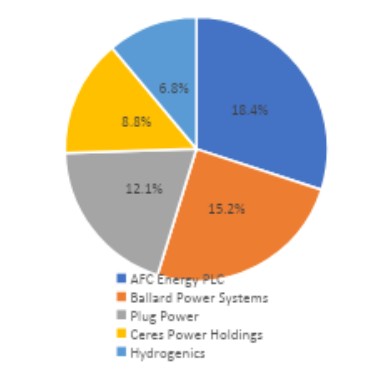
AFC Energy PLC, Ballard Power Systems, Plug Power, Ceres Power Holdings, and Hydrogenicsare the key players in the Alkaline Fuel Cells Market
AFC Energy PLC
AFC Energy PLC leads the Alkaline Fuel Cells (AFC) Market with a commanding 18.4% market share, leveraging its long-standing expertise in developing and commercializing hydrogen-powered alkaline fuel cell systems. The company is at the forefront of providing zero-emission power solutions, particularly for industrial, mobility, and off-grid applications. Its modular and scalable fuel cell technology is designed to offer reliable, clean energy in sectors aiming to transition from fossil fuels, making it a preferred choice in the emerging hydrogen economy.
Ballard Power Systems
Ballard Power Systems holds a significant 15.2% share in the global AFC market, recognized for its robust portfolio of proton exchange membrane (PEM) and alkaline fuel cell technologies. While the company is more widely known for PEM solutions, its research and development in alkaline fuel cell stacks has positioned it as a vital contributor to hydrogen energy innovations. Ballard supplies fuel cell systems for heavy-duty vehicles, rail, marine, and stationary power, making it a key enabler of clean mobility.
Plug Power
Plug Power commands a 12.1% share in the alkaline fuel cells segment, largely driven by its innovations in hydrogen infrastructure and fuel cell-based power solutions. While the company’s primary focus has historically been on PEM fuel cells, it has expanded into alkaline technologies as part of its broader push to develop a green hydrogen ecosystem. Plug Power’s AFC applications are gaining interest in material handling, backup power, and stationary generation, particularly in logistics and warehousing sectors.
Ceres Power Holdings
Ceres Power Holdings holds an 8.8% market share, establishing itself as a prominent innovator in solid oxide and alkaline fuel cell technologies. The company’s SteelCell technology platform has laid the foundation for future advancements in alkaline systems, offering high efficiency and fuel flexibility. Ceres Power primarily partners with OEMs and industrial players, licensing its fuel cell intellectual property to accelerate the commercialization of low-carbon energy solutions globally.
Hydrogenics
Hydrogenics, now a part of Cummins Inc., holds a 6.8% share in the alkaline fuel cell market and plays a vital role in developing electrolyzers and fuel cell systems for diverse applications. The company has long been engaged in AFC innovation, particularly in projects involving stationary backup power, grid balancing, and hydrogen mobility. Its deep engineering capabilities and global presence have made it a go-to partner for hydrogen infrastructure development. Hydrogenics stands out for its focus on integrated hydrogen solutions, which combine electrolysis, compression, storage, and fuel cell generation.
Potential Threats to Top Five Players in the Alkaline Fuel Cells Market:
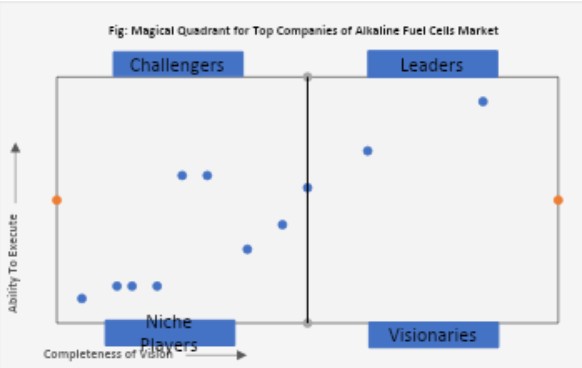
CMR identified a set of emerging companies in the alkaline fuel cells (AFC) market that are likely to pose substantial competition to existing top-tier players. Companies such as Nedstack Fuel Cell Technology, PowerCell Sweden AB, De Nora, ITM Power, and Horizon Fuel Cell Technologies are driving innovation and challenging market dynamics with advanced technologies, strong partnerships, and strategic expansions. Nedstack Fuel Cell Technology, based in the Netherlands, is gaining momentum for its industrial-grade PEM fuel cell systems, including those adaptable for alkaline technologies. With applications in maritime and heavy-duty transportation, Nedstack's focus on modularity and system scalability makes it a growing threat to incumbents. Their collaborations with infrastructure and energy providers strengthen their market position and broaden their commercial reach. PowerCell Sweden AB is another contender transforming the competitive landscape. While originally known for PEM fuel cells, the company is channeling its expertise into complementary alkaline fuel cell systems that deliver high efficiency and environmental benefits. The company’s strategic alliances, such as those with Bosch and Hitachi, offer it a global footprint and robust technical support to expand its influence in clean energy markets. Similarly, De Nora, an Italian multinational known for its electrochemical technologies, is leveraging its core strengths to enter the AFC market. By integrating alkaline fuel cell applications into water electrolysis and energy storage solutions, De Nora is tapping into industrial decarbonization trends, thereby challenging traditional market leaders.
ITM Power, a UK-based clean tech firm, has made significant progress in hydrogen energy systems and is leveraging this capability to offer integrated solutions that include AFC technology. With strong backing from industrial partners and governments, the company is aligning with national and international clean energy goals. Horizon Fuel Cell Technologies, headquartered in Singapore, brings a unique angle to the market through its focus on compact, lightweight AFC systems suitable for portable power and emerging mobility solutions. Their rapid prototyping and adaptability to niche applications make them a nimble and disruptive force. These emerging companies are capitalizing on strategic innovation, cross-sector partnerships, and global environmental policies to gain a foothold in the alkaline fuel cells market. Their focus on cost reduction, system flexibility, and application diversity positions them as credible threats capable of reshaping competitive dynamics and accelerating the adoption of alkaline fuel cell technologies.
Conclusion
Adoption of sustainable energy solutions and hydrogen-based power systems is driving growth in the Alkaline Fuel Cells Market
The alkaline fuel cells market is entering a transformative phase as governments, industries, and consumers seek cleaner energy alternatives to combat climate change and reduce carbon emissions. The growing interest in hydrogen as a key component of the global energy transition is directly fueling demand for AFC technologies. Forecasts suggest a notable increase in market size from USD 78821.9 million in 2024 to USD 152505.5 million by 2032, reflecting strong momentum driven by supportive policies, technological advancements, and increased deployment across diverse sectors. Leading companies such as AFC Energy, Plug Power, FuelCell Energy, Bloom Energy, and Ballard Power Systems are investing in innovation and scaling up their operations to meet the rising demand for efficient and reliable fuel cell solutions. Yet, emerging players such as Nedstack, PowerCell Sweden, and De Nora are rapidly entering the market with disruptive innovations and strategic alliances that challenge traditional hierarchies. Their efforts to reduce production costs, improve system reliability, and expand application scope are reshaping the market landscape. For new entrants and existing players alike, future success will depend on their ability to adapt to regulatory frameworks, secure partnerships across the hydrogen value chain, and deliver scalable solutions that align with global decarbonization goals. The continued advancement of hydrogen production, storage, and distribution infrastructure will be pivotal to supporting the growth of the alkaline fuel cells market. Stakeholders who proactively invest in R&D, prioritize sustainability, and align their strategies with long-term climate goals will not only achieve commercial success but also play a critical role in shaping the future of clean energy. The collaborative efforts among policymakers, technology developers, and industry leaders will determine the pace and scale of AFC adoption in the years ahead.
 X
X
Article Details
-
Author Vinayak Bali
-
Published 28 May 2025
-
Last Updated 16 Jun 2025
-
Reading Time~3 minutes
Related Reports
Get a Custom Report
Interested in a similar analysis for your market? Our experts can deliver a customized report.
Contact Our ExpertsMore Articles
Explore all published articles across 30+ industry verticals.
View All Articles