Article
RF Feeder Cables: 2026 Strategic Trends
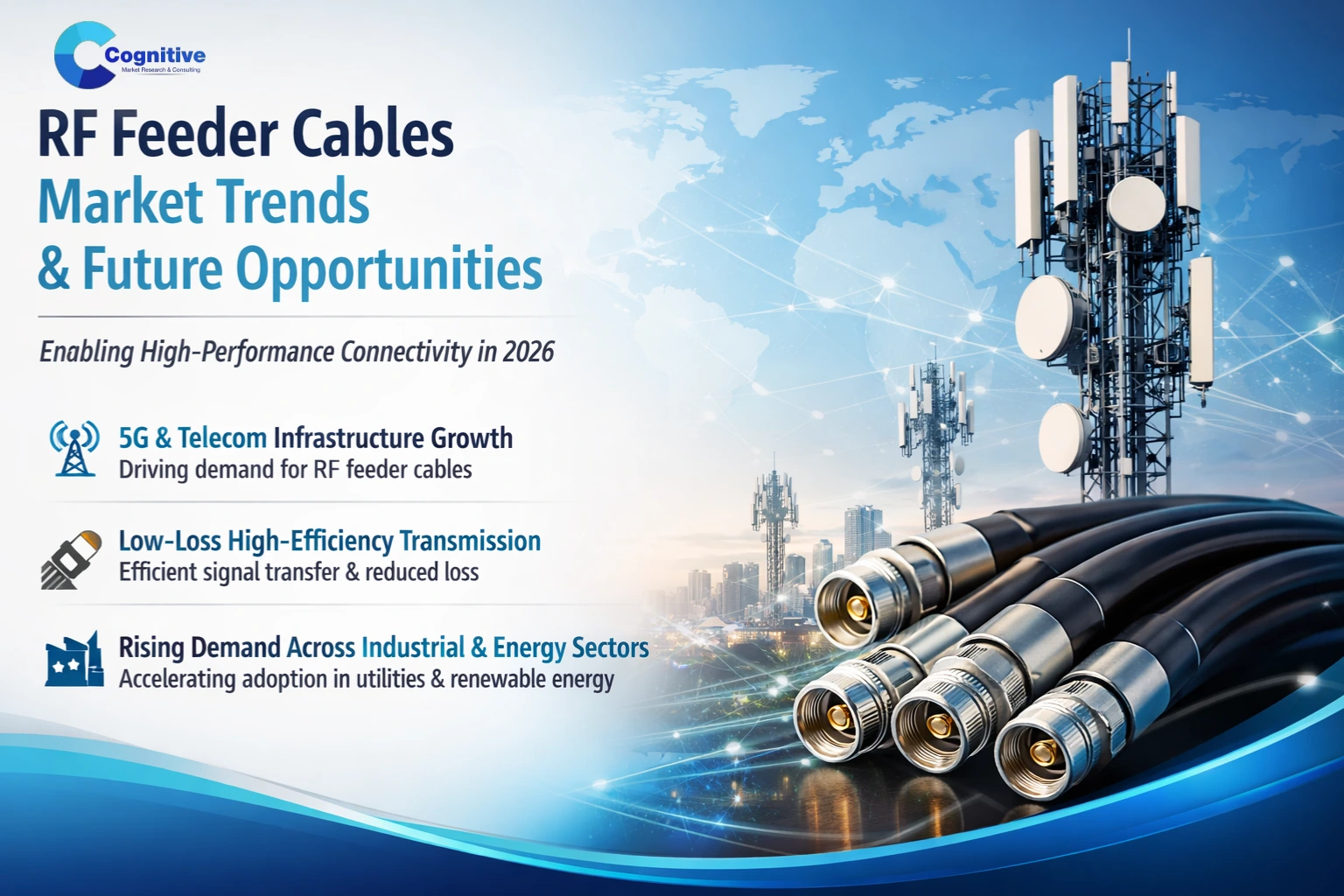
The global RF feeder cable market has hit a high-velocity phase. It’s funny a few years ago, many dismissed this as a mature or even stagnant hardware segment. But thanks to the global rollout of 5G-Advanced (Release 18), the early groundwork for 6G, and the explosion of Low Earth Orbit (LEO) satellite ground stations, the market is more alive than ever. For those of us on the manufacturing side, the mandate is clear: it’s no longer just about pushing out miles of standard cable. The real margins are now found in high-performance solutions that can handle millimeter-wave (mmWave) frequencies without losing signal integrity.
Where the Market Stands in 2026
Our latest data suggests the RF feeder system market is hovering around USD 1.59 billion. We’re seeing a compound annual growth rate (CAGR) between 8% and 11%, depending on which niche you’re playing in.
What’s actually driving the checks being signed this year?
5G-Advanced Densification: We’re moving past the big tower phase into heavy network densification. This means more small cells and MIMO antenna arrays, which translates to a massive spike in demand for jumper cables and feeder lines per site.
The LEO Satellite Boom: With over 10,000 active satellites now in orbit, the ground infrastructure needed to talk to them is a goldmine. We’re seeing huge orders for cables supporting Ka-band and Ku-band frequencies.
Defense & Aerospace: Between geopolitical shifts and the need for better radar, the demand for tank-proof, high-frequency cables for electronic warfare (EW) is at an all-time high.
The Major Shifts We’re Tracking
1. The 50GHz Barrier
In 2026, the industry is finally pushing past the comfort zone of sub-6 GHz. We’re seeing a significant move into the 24GHz to 52GHz range. For manufacturers, this is a materials science challenge. You can't use the same old dielectrics; you need expanded PTFE and high-purity polyethylene to keep attenuation low at these sensitive wavelengths. If you aren't prototyping for sub-THz applications yet, you’re already behind the 6G curve.
2. The Rise of Micro-Coax
Everything is getting smaller from medical sensors to IoT devices and drone avionics. This has created a surge in demand for micro-coaxial assemblies. These need to offer the same shielding as a thick feeder cable but in a space the size of a needle. The shops that have mastered automated termination and micro-braiding are the ones winning the high-margin contracts right now.
3. The Green Cable Mandate
Sustainability is no longer just a buzzword in a brochure; it’s a procurement requirement. In 2026, if your cables aren't LSZH (Low Smoke Zero Halogen) for indoor use, you aren't getting the contract. We’re also seeing a huge push for 100% recyclable polymers and ethically sourced copper. B2B clients are under pressure to show a clean supply chain, and they’re passing that pressure down to us.
4. AI on the Factory Floor
The leading players have integrated real-time AI telemetry into their extrusion lines. In 2026, waiting until the end of a run to test for impedance or structural return loss is considered obsolete. Tier 1 suppliers are now monitoring these metrics in real-time, which slashes waste and ensures that every meter of cable is phase-stable enough for modern antennas.
Real Opportunities for Growth
The Hybrid Play: RF-over-Fiber (RFoF)
Coax isn't going away, but it has competition. We’re advising our clients to look at hybrid solutions. Combining optical fiber for the long hauls with coaxial jumpers for the final antenna connection is becoming the standard architecture for modern sites. Don't fight the fiber integrate it.
Winning in Emerging Markets
While the high-value aerospace stuff is centered in North America and Europe, the sheer volume is in the Asia-Pacific region. India and Southeast Asia are in the middle of massive rural broadband pushes. There is a huge opportunity there for manufacturers who can produce durable, weather-resistant cables at a competitive price point for these specific environments.
Customization is Your Best Defense
The race to the bottom on price is a losing game. The real winners in 2026 are providing plug-and-play assemblies. This means pre-terminated, weather-proofed connectors that come with factory-certified test reports. If you can offer value-adds like custom phase-matching for antenna pairs, you move from being a vendor to a consultant.
Conclusion
The RF feeder cable market in 2026 is defined by two things: precision and performance. To grow, you need to invest in high-frequency materials and smart manufacturing. At Cognitive Market Research, we believe the biggest winners will be those who stop viewing cable as a commodity and start viewing it as a high-tech component essential to the 6G and satellite era.

 X
X
Article Details
-
Author Anushka Gore
-
Published 17 Feb 2025
-
Last Updated 02 Apr 2026
-
Reading Time~3 minutes
Related Reports
Get a Custom Report
Interested in a similar analysis for your market? Our experts can deliver a customized report.
Contact Our ExpertsMore Articles
Explore all published articles across 30+ industry verticals.
View All Articles