Article
Global In-Store Music Service Market: 2026 Strategic Outlook
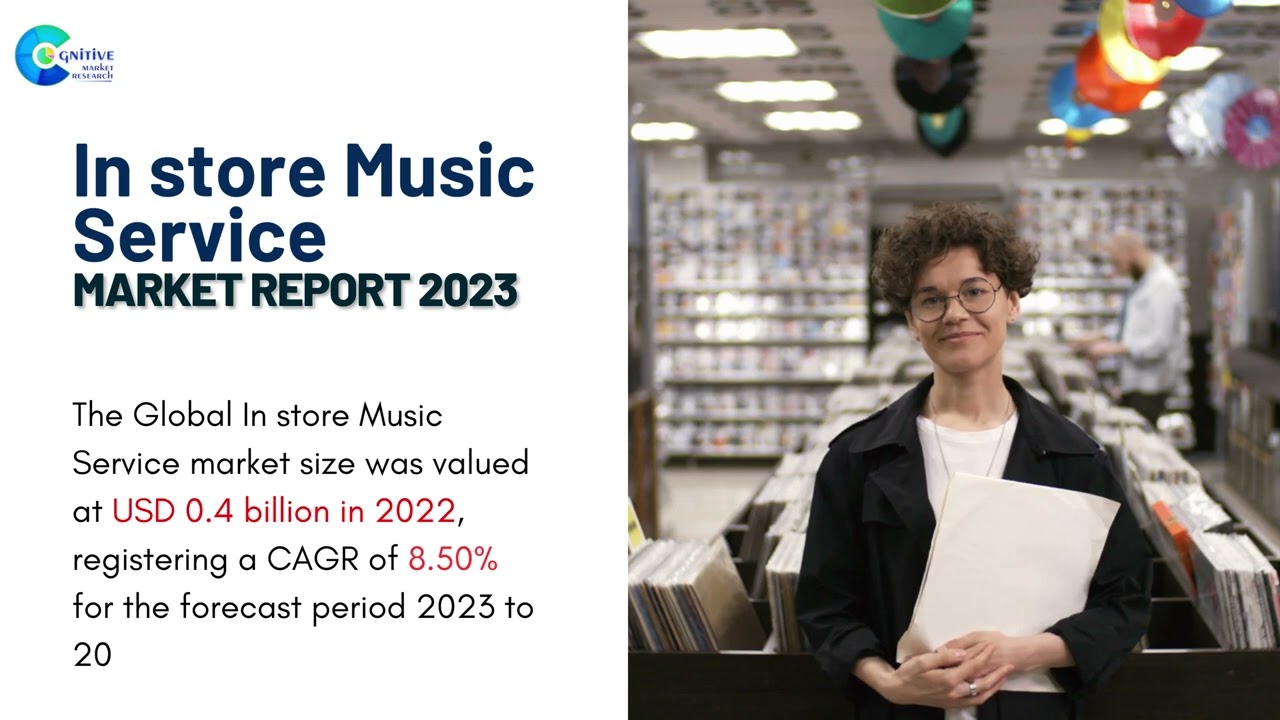
The global in-store music service market enters 2026 with a valuation of approximately USD 2.35 billion, maintaining a steady CAGR of 9%. However, the internal mechanics of the market have changed. We are seeing a move away from simple pre-set playlists toward adaptive soundscapes systems that use real-time data to change the tempo and mood of a store based on foot traffic. For B2B providers, the value proposition is no longer just legal music; it is sensory conversion.
Key Market Drivers for 2026
Experiential Retail as Survival: As e-commerce captures more of the utility market, brick-and-mortar stores have doubled down on vibe-driven shopping. Brands are using music as an acoustic bubble to increase customer dwell time, with data showing that brand-fit music can boost time spent in-store by up to 42%.
Smart Retail Ecosystems: We are seeing a massive surge in the integration of music with IoT devices. By 2026, premium retail contracts often require music systems to sync with smart lighting and digital signage to create a unified, multi-sensory promotional campaign.
The Rise of Hyper-Local Sound: There is a growing demand for localization. Global brands no longer want a one size fits all playlist; they want music that reflects regional cultural festivals and local demographics, driving the need for sophisticated, region-specific curation services.
Material & Technology Innovations
For manufacturers of audio equipment and software providers, the following technologies are the new industry standards:
AI-Driven Mood Engines: AI has moved from novelty to standard infrastructure. In 2026, leading platforms are using AI to analyze real-time customer behavior and purchase patterns, adjusting the audio output to either energize a sluggish morning crowd or soothe a peak-hour rush.
Cloud-Based Centralization: The shift to the cloud is nearly total. Large-scale retail chains now demand centralized control where they can update thousands of locations from a single dashboard. This has made local servers largely obsolete, favoring service providers who offer high-security, low-latency streaming solutions.
Advanced Sonic Branding: We’ve moved beyond popular hits. Brands are increasingly commissioning original, AI-assisted compositions immersive soundscapes that are unique to their identity, avoiding the high cost of popular music licensing while strengthening brand recall.
Segment Analysis for B2B Providers
Retail & Specialty Stores (Largest Share): This segment remains the dominant revenue driver. The focus here is on Private Labels of music bespoke audio identities that make a boutique feel exclusive.
Hospitality & Leisure (Fastest Growth): Hotels and high-end restaurants are the fastest-growing sub-segments. They are seeking all-in-one sensory packages that include music, scent, and visual branding, creating a significant opportunity for bundled B2B service contracts.
Regional Dynamics: While North America remains the largest market due to early tech adoption, the Asia-Pacific region is the fastest-growing hub. Rapid urbanization and the expansion of mega-malls in India and China have created a massive vacuum for professional, licensed in-store music services.
Strategic Recommendations for 2026
Focus on Data-as-a-Service (DaaS): Don't just sell music; sell the analytics. Provide your clients with data on how music tempo correlates with their transaction volumes. This proof of performance makes your service indispensable to their marketing teams.
Simplify the Licensing Ecosystem: The #1 pain point for retailers is the complexity of music rights. Manufacturers and providers who offer a zero-liability licensing model where all performance rights are bundled into a single monthly fee—are winning the most contracts.
Integrate with Mobile Loyalty: We are seeing an emerging trend where shoppers can influence the store’s playlist via the brand’s mobile app. If your hardware can support this kind of interactivity, you have a major competitive advantage.
Challenges to Monitor
Saturated Provider Landscape: The market is becoming fragmented with many small players. To stand out, you must offer deep technical integration (API-first solutions) that can easily plug into a retailer’s existing tech stack.
Regulatory Compliance: International trade relations and changing copyright laws in emerging markets require constant monitoring to ensure cross-border service remains legally compliant.
Conclusion
By 2026, the in-store music market is no longer about background noise; it is a sophisticated engagement tool. For manufacturers and service providers, the win lies in integration. The most successful players will be those who can merge high-fidelity audio hardware with AI-driven software that proves its ROI through customer analytics. In this environment, the music is the product, but the data is the currency.

 X
X
Article Details
-
Author Kalyani Raje
-
Published 18 Nov 2024
-
Last Updated 13 Apr 2026
-
Reading Time~3 minutes
Related Reports
Get a Custom Report
Interested in a similar analysis for your market? Our experts can deliver a customized report.
Contact Our ExpertsMore Articles
Explore all published articles across 30+ industry verticals.
View All Articles