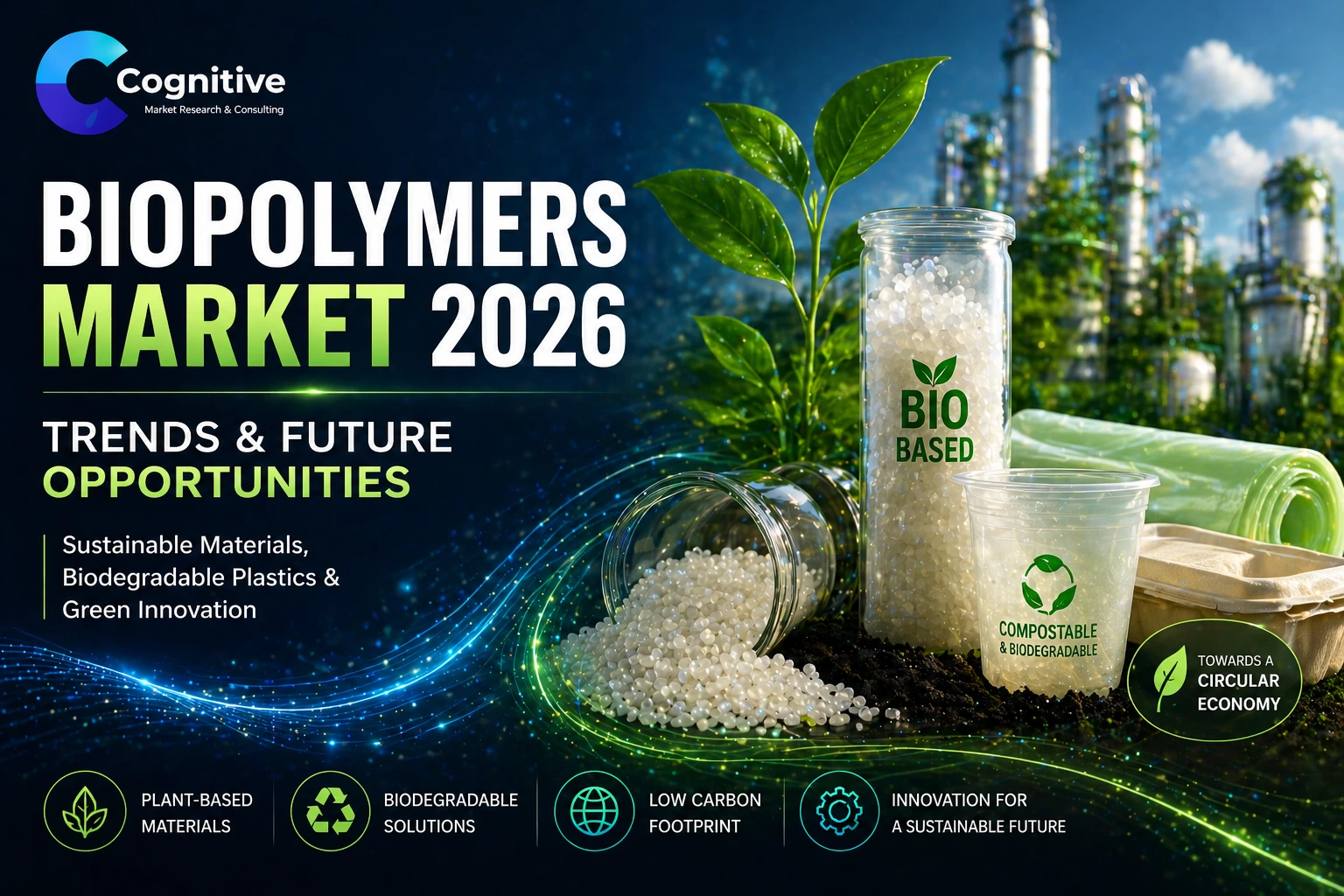
Article
Market Insight: Biopolymers Trends and Future Opportunities
As we navigate through 2026, the global biopolymers market is hitting a massive turning point. We’ve moved past the days when bioplastics were just a green alternative that companies toyed with for PR. Today, they are a core strategic necessity for industrial manufacturing. This shift is being driven by a combination of aggressive decarbonization mandates and a genuine leap in material performance meaning these materials are finally starting to compete with petroleum-based resins on functionality, not just ethics.
Current Market Landscape (2026)
From where we stand today, the global biopolymers market is on track to hit roughly USD 17.07 billion by the end of 2026. We’re seeing a steady growth rate of over 10%, which tells us this isn't a passing trend. For those of you on the manufacturing side, the market has split into two very clear paths: biodegradable polymers like PLA and PHA, and drop-in bio-based solutions like Bio-PE that allow you to keep your current hardware while swapping the feedstock.
While Europe used to be the only game in town for regulation, the Asia-Pacific region has completely taken over as the production engine. China and India, in particular, have scaled up their capacity at an incredible pace, utilizing their massive agricultural bases and government incentives to break away from fossil fuel reliance.
Key Trends Shaping 2026
1. The Rise of High-Performance PHA (Polyhydroxyalkanoates)
By 2026, PHA has become the gold child for manufacturers. Unlike the first generation of biopolymers that were a bit finicky to work with, modern PHA grades offer much better stability. We’re seeing manufacturers move toward semi-crystalline PHA to fix old issues with heat resistance and shelf life. This makes it a serious contender for heavy-duty uses in agriculture and medical hardware, rather than just simple packaging.
2. Regulatory Proof of Performance and Standardization
The days of greenwashing or making vague sustainability claims are officially over. In 2026, the market is demanding hard data. Between the EU’s Single-Use Plastics Directive and new EPR laws in the US and Asia, you can’t just say a product is bio. You have to prove it. This is why we’re seeing a huge push for digital product passports and blockchain tracking manufacturers need a way to verify the bio-content and end-of-life behavior of every batch they produce.
3. Integration of Drop-In Sustainable Additives
One of the most practical trends we’re tracking this year is the move toward bio-additives. Many of our clients are looking for ways to make traditional resins biodegradable by adding small amounts (around 1%) of bio-catalysts. This is a game-changer because it allows you to use your existing molds and machinery without the massive CAPEX hit of a total factory redesign. It’s the middle path for industrial packaging and electronics.
4. Advanced Feedstock Diversification
To avoid the old food vs. fuel argument, 2026 has seen a major shift toward second and third-generation feedstocks. We’re moving beyond corn and sugar. Production is now leaning on agricultural waste, algae, and even carbon-capture technology that turns methane gas into plastic. This move toward waste-based fermentation is finally becoming commercially viable, which helps keep raw material costs from swinging wildly.
Strategic Opportunities for Manufacturers
Healthcare and Biomedical Expansion
The medical field is currently a massive growth engine. If you’re looking for high-margin opportunities, this is it. Focus on biopolymers for things like surgical sutures, specialized wound dressings, and drug delivery systems. The fact that materials like PLA and chitosan are naturally biocompatible gives them an edge that traditional plastics simply can't touch.
Automotive and Electronics
With the 2026 sustainability targets now in full effect for car manufacturers, there’s a desperate need for bio-based composites. Brands are looking for interior components and electronics housings that don't just look green but can actually handle high heat and impact. There is a huge gap in the market for hybrid biopolymers that offer the durability of traditional plastics with a high bio-content.
Circular Economy Infrastructure
There’s a growing win-win opportunity for manufacturers to team up with waste management companies. By engineering materials specifically for anaerobic digestion, you’re helping these firms generate renewable energy from waste while solving your own disposal issues. It’s about thinking beyond the factory gates.
Challenges and Strategic Outlook
Of course, it’s not all easy going. The elephant in the room is still cost. Even in 2026, PLA still carries a premium of 50% to 100% over standard polyethylene. However, that gap is closing every month as production tech like enzyme catalysis gets more efficient.
Strategic Recommendation: For the manufacturers we work with here at Cognitive Market Research, the best move for 2026 is a hybrid strategy. Don't try to flip your entire operation overnight. Instead, look at how you can blend bio-based materials into your existing lines and focus on the sectors where the green premium is actually supported by the end consumer. The question isn't whether you'll switch, but how quickly you can adapt your high-throughput lines to stay ahead of the curve.
Conclusion
As we look toward the tail end of 2026, it’s clear that the biopolymers market has matured into a sophisticated, high-stakes industry. The transition from novelty to necessity is complete. For manufacturers, the roadmap involves balancing the high costs of raw materials with the undeniable pressure from regulators and B2B clients for carbon-neutral supply chains. Success in this space no longer requires just a sustainability department—it requires a total integration of bio-material science into the core of your manufacturing strategy. Those who invest in PHA and advanced feedstock partnerships now will likely be the ones setting the standards for the rest of the decade.


 X
X
Article Details
-
Author Kalyani Raje
-
Published 26 Nov 2024
-
Last Updated 29 Apr 2026
-
Reading Time~3 minutes
Related Reports
Get a Custom Report
Interested in a similar analysis for your market? Our experts can deliver a customized report.
Contact Our ExpertsMore Articles
Explore all published articles across 30+ industry verticals.
View All Articles