Article
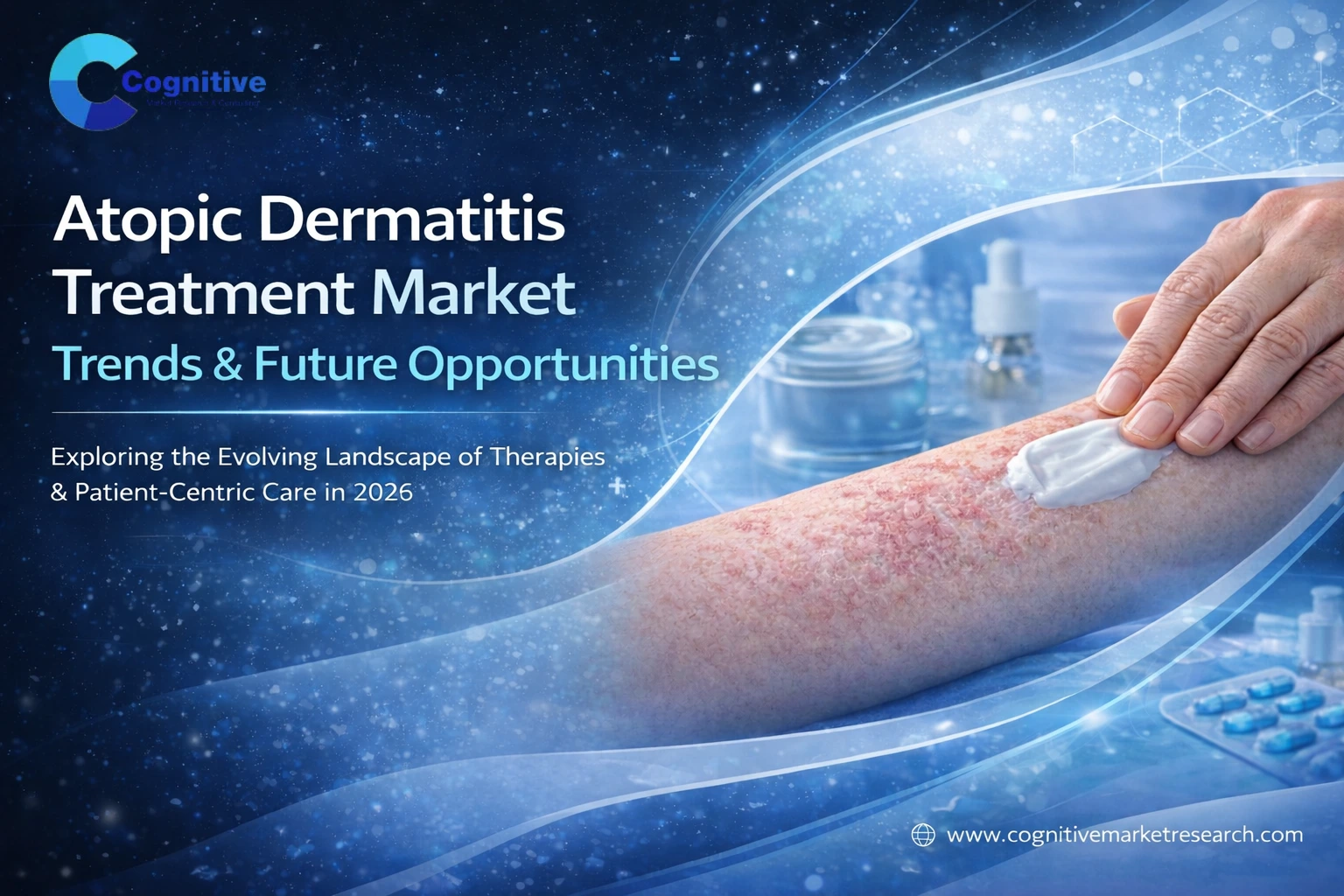
Atopic Dermatitis Treatment Market: Strategic Outlook and Manufacturing Opportunities
The global AD market has officially hit its stride in 2026. We’ve moved past the era of shotgun immunosuppression and entered the age of precision. The market is currently valued at roughly USD 21.15 billion, and while a 9.5% CAGR is impressive, it doesn’t tell the whole story. The real movement is in the details: the explosion of pediatric-safe biologics, the mainstreaming of JAK inhibitors, and a massive surge in demand from the Asia-Pacific middle class.
I. Current Market Dynamics: What’s Moving the Needle in 2026?
We’re seeing what I like to call Biologic Revolution 2.0. While old-school corticosteroids still move the most volume (about 34.8% of scripts), they aren't the profit drivers anymore. The money and the innovation is in targeted therapy.
Precision Over Power:
The approvals of lebrikizumab (Ebglyss) and nemolizumab (Nemluvio) a couple of years back have finally hit full commercial scale. They’ve changed the conversation by focusing on quality of life specifically, less frequent dosing (monthly) and a direct attack on the itch-pathway (IL-31). In 2026, clear skin is the baseline; not itching and convenience are the new competitive edges.
The Non-Steroidal Win:
We’re seeing a massive pivot in the topical market. Steroid phobia is real, and manufacturers who jumped on the non-steroidal bandwagon with roflumilast (Zoryve) and tapinarof (Vtama) are reaping the rewards. These products have become the gold standard for sensitive zone treatments (face and folds), where doctors used to hesitate.
The Pediatric Gold Rush:
This is the biggest shift I’ve seen this year. We’ve seen a downward age-migration where advanced therapies are now being prescribed to toddlers. This has opened up a massive, high-loyalty patient base that manufacturers simply can’t ignore.
II. The Competitive Landscape
In 2026, the leaderboard is being reshuffled. It’s no longer a one-drug race.
The Biologic Battle:
Dupilumab is still the giant, but it’s feeling the heat. Lebrikizumab’s monthly maintenance schedule is winning over patients who are tired of every-other-week injections.
The JAK Factor:
Oral JAK inhibitors like upadacitinib have found their groove as the heavy hitters for patients who need clearance now. Meanwhile, topical JAKs like ruxolitinib (Opzelura) are dominating the localized treatment space, especially for tricky areas like hands and feet.
New Targets:
We’re keeping a close eye on the 2026 pipeline for OX40 antagonists. The goal here isn't just treating a flare it’s trying to reset the immune system for long-term remission.
III. Manufacturing and Supply Chain: The B2B Reality
If you’re on the production side, 2026 brought some tough realities.
The Price Squeeze:
Payers are pushing back hard on the cost of biologics. To stay profitable, we’re seeing our clients invest heavily in continuous manufacturing and high-concentration formulas. If you can pack more punch into a smaller, shelf-stable dose, you win.
The Biosimilar Shadow:
We’re standing on the edge of a patent cliff. For those in the biosimilar space, 2026 is the year to finalize scale-up. The first mover to a generic biologic is going to capture a massive portion of the value-based care market.
Thinking Locally:
Between trade volatility and the need for fresh APIs, the trend is regionalization. Manufacturers are building hubs closer to their end-markets in North America and Europe to avoid the supply chain nightmares of the early 2020s.
IV. Regional Growth: Where the Patients Are
North America:
Still the revenue engine (41.3% share). The infrastructure for expensive biologics is just more mature here.
Asia-Pacific:
This is the growth story of 2026. Between China’s reimbursement updates and the rising healthcare spend in India, the sheer volume of new patients entering the market is staggering.
V. Looking Ahead: What’s Next?
The future is Personalized Dermatology. We’re moving toward a world where a doctor does a quick swab, identifies your specific cytokine signature, and picks the drug that matches your biology. No more trial and error.
We’re also seeing Digital Wrappers around drugs. If your medication comes with an app that tracks your progress and sends data to your doctor, payers are much more likely to cover it. In 2026, the drug is only half the product; the data is the other half.
Conclusion
To wrap it up: the Atopic Dermatitis market in 2026 is no longer a monolith. It’s a collection of highly specialized niches. For manufacturers, the path forward isn't just about making a stronger drug it’s about making a smarter one. Whether that’s a non-steroidal cream that actually works, a biologic you only have to take once a month, or a pediatric-safe option that parents can trust, the market is rewarding those who solve for the patient’s lifestyle, not just their pathology. Success this year is about precision, convenience, and global accessibility.

 X
X
Article Details
-
Author Anjali Lawand
-
Published 06 Dec 2024
-
Last Updated 09 Apr 2026
-
Reading Time~3 minutes
Related Reports
Get a Custom Report
Interested in a similar analysis for your market? Our experts can deliver a customized report.
Contact Our ExpertsMore Articles
Explore all published articles across 30+ industry verticals.
View All Articles