We value your privacy
We use cookies to improve your experience and analyze traffic. By continuing, you consent to our use of cookies under GDPR, CCPA and other applicable laws. Privacy Policy
Cookie preferences
Choose which categories of cookies you allow. Strictly necessary cookies are always on.
Strictly necessary
Required for core site functionality, security and your session. Always active.
Analytics
Help us understand how visitors use the site (e.g. Google Analytics) so we can improve it.
Marketing
Used to measure campaigns and show you relevant ads on other sites (e.g. LinkedIn, Google Ads).
ⓘ 8th Edition 2026Revenue: USD Million/BillionVolume/Consumption: Unit
Antibody Production Market Analysis 2026
Antibody Production market size was USD 16421.5 million in 2023 and will expand at a compound annual growth rate (CAGR) of 13.50% from 2023 to 2030 Download a free sample with data verified by Supriya Yadav
Antibody Production Market Product Type Segment Analysis
According to Cognitive Market Research, consumables held the major market share over the forecast period. The dominance of consumables in the Antibody Production market is fuelled by continual demand for cell culture media, purification reagents, and chromatography columns. Increasing research activities and therapeutic antibody development drive sustained consumption. Additionally, advancements in disposable technologies enhance scalability, reducing production costs and boosting consumables' market share.
Software is the fastest-growing category over the forecast period. Advanced software solutions streamline process monitoring, optimizing efficiency and reducing errors. Integration of data analytics and artificial intelligence enhances process control, accelerating development timelines. Increasing adoption of sophisticated bioprocess management systems by biopharmaceutical companies contributes to the exponential growth of software in antibody production.
Instruments
Consumables
Software
Instruments Antibody Production Market Analysis
XX
Instruments Market Size 2025
XX %
CAGR
Locked · Full data in paid report
Consumables Antibody Production Market Analysis
XX
Consumables Market Size 2025
XX %
CAGR
Locked · Full data in paid report
Software Antibody Production Market Analysis
XX
Software Market Size 2025
XX %
CAGR
Locked · Full data in paid report
Market size by (Illustrative, 2025)
Share distribution (2025)
Disclaimer: The charts and graphs are for illustrative purposes only and do not represent actual market values. To access accurate quantitative data, please request a paid report or request free sample.
To learn more about market share and segmentation, request the free sample pages.
Competitor Analysis
Competitive Landscape of the Antibody Production Market
The competitive landscape of the antibody production market is dynamic, marked by prominent players driving innovation and market expansion. Key companies focus on strategic collaborations, mergers, and acquisitions to enhance their product portfolios and global presence. Continuous research and development efforts underscore the industry's competitiveness, fostering advancements in bioprocessing technologies and therapeutic applications of antibodies.
Antibody Production Industry News
In February 2023, Thermo Fisher Scientific partnered with Elektrofi for contract manufacturing agreement. This is likely to be operational by early 2024, the partnership aims to establish a current good manufacturing practice (CGMP) line. This strategic move is geared towards bolstering early clinical endeavours across diverse pipeline programs.
Click any bar or cell to request the full company profile
Top Companies (In no particular order)
2022 (A)
2023 (A)
2024 (A)
2025 (A)
Illumina Inc.
•••
•••
•••
•••
Thermo Fisher Scientific Inc.
•••
•••
•••
•••
Pacific Biosciences of California Inc.
•••
•••
•••
•••
BGI
•••
•••
•••
•••
QIAGEN
•••
•••
•••
•••
Agilent Technologies
•••
•••
•••
•••
PerkinElmer Inc.
•••
•••
•••
•••
ProPhase Labs Inc. (Nebula Genomics)
•••
•••
•••
•••
Psomagen
•••
•••
•••
•••
Azenta US Inc.
•••
•••
•••
•••
We Provide Regional Breakdown of this Companies and Company specific to any Country, Region, Product/ service as well. We cover market share analysis for publicly listed companies as well as privately held companies, subject to data availability.
According to Cognitive Market Research, the global Antibody Production market size is USD 16421.5 million in 2023 and will expand at a compound annual growth rate (CAGR) of 13.50% from 2023 to 2030.
North America held the major market of around 40% of the global revenue with a market size of USD 6568.60 million in 2023 and will grow at a compound annual growth rate (CAGR) of 11.7% from 2023 to 2030
Europe accounted for a share of around 30% of the global market size of USD 4926.45 million
Asia Pacific held the market of around 23% of the global revenue with a market size of USD 3776.95 million in 2023 and will grow at a compound annual growth rate (CAGR) of 15.5% from 2023 to 2030.
Latin America market of around 5% of the global revenue with a market size of USD 821.08 million in 2023 and will grow at a compound annual growth rate (CAGR) of 12.9% from 2023 to 2030
Middle East and Africa held the major market of around 2% of the global revenue with a market size of USD 328.43 million in 2023 and will grow at a compound annual growth rate (CAGR) of 13.2% from 2023 to 2030
What is Antibody production?
Antibody production refers to the process of generating specific proteins known as antibodies, which play a crucial role in the immune system's defence against pathogens. This biotechnological endeavour involves cultivating specialized cells, typically through cell culture or bioreactors, and inducing them to produce large quantities of targeted antibodies. The produced antibodies can be utilized for various applications, including diagnostics, therapeutics, and research purposes. Achieving optimal antibody production involves meticulous optimization of culture conditions, selection of suitable host cells, and strategic engineering to enhance yield and efficacy. As a pivotal component in the biomedical field, antibody production contributes significantly to advancements in medical research and the development of innovative therapeutic interventions.
Technological advancements in bioprocessing have revolutionized antibody production, significantly impacting sales in the biopharmaceutical sector. Innovations in cell culture systems, fermentation processes, and purification techniques have led to heightened efficiency and increased yields. Enhanced bioreactor designs and process automation streamline production, reducing costs and accelerating timelines. These advancements address challenges related to scalability and reproducibility, making antibody production more attractive for pharmaceutical companies. Improved analytical tools for monitoring and control further ensure product quality. As the industry embraces these cutting-edge technologies, the overall appeal of antibody production increases, driving sales growth and positioning the market as a vital player in the biopharmaceutical landscape.
For instance, in June 2022, the National Institutes of Health (NIH) launched monoclonal antibodies to address asthma in urban youth. This innovative approach aims to mitigate asthma attacks and enhance lung function, offering potential relief to children residing in economically challenged urban areas experiencing poorly controlled allergic asthma.
The global antibody production market will expand significantly by 13.50% CAGR between 2023 and 2030.
Continuous innovation in bioprocessing technologies enhances production efficiency, attracting investments from biopharmaceutical companies.
Demand for consumables remains higher in the antibody production market.
The downstream processing category held the highest antibody production market revenue share in 2023.
North American antibody production will continue to lead, whereas the Asia-Pacific antibody production market will experience the most substantial growth until 2030.
Supriya is a Team Lead at Cognitive Market Research & Consulting, leading research initiatives and strategic intelligence projects across the Healthcare, Pharmaceuticals, and Medical Devices & Consumables sectors. With more than two years of experience in market research and data analysis, she plays a key role in helping organizations navigate complex healthcare ecosystems, identify emerging opportunities, and make informed business decisions through data-driven insights and market intelligence.
Combining expertise in both primary and secondary research methodologies with a strong academic foundation in Marketing and Finance, Supriya oversees the execution of market assessments, competitive intelligence studies, forecasting models, stakeholder interviews, trend analysis, and custom consulting engagements. She collaborates with healthcare providers, pharmaceutical manufacturers, medical device companies, industry experts, and other key stakeholders to gather firsthand market perspectives while validating findings through extensive research. Her ability to interpret clinical, commercial, and market data enables clients to better understand industry developments, regulatory influences, innovation trends, and competitive dynamics.
In her leadership role, she manages end-to-end research projects and guides cross-functional teams in delivering high-quality market reports, consulting solutions, and strategic studies. Her expertise in market estimation, forecasting, and analytical modeling helps organizations evaluate market potential, assess growth opportunities, strengthen competitive positioning, and support strategic planning initiatives. By transforming complex healthcare and life sciences data into actionable business intelligence, she enables clients to make confident decisions in rapidly evolving market environments.
Driven by a passion for healthcare innovation and continuous professional development, Supriya remains committed to staying ahead of industry trends, technological advancements, and changing market conditions. Her leadership, analytical mindset, and dedication to research excellence help organizations mitigate risks, capitalize on emerging opportunities, and achieve sustainable growth across the global healthcare and life sciences landscape.
The global market size for antibody productions in 2023 was 16421.5 USD million.
The global antibody production market is expected to grow with a CAGR of 13.50% over the projected period.
North America held a significant global antibody production market revenue share in 2023.
Asia-Pacific will witness the fastest growth of the global antibody production market over the coming years.
The US had the most significant global antibody production market revenue share in 2023.
The main drivers of the growth of the antibody production market are Increasing Demand for therapeutic antibodies, expanding biopharmaceutical industry, and growing research & development activities.
The consumables segment had the largest share in the global antibody production market by product type.
In 2023, the downstream processing segment had a significant revenue share in the global antibody production market in terms of process.
★ Reviews
Rate this report
Antibody Production Market Analysis — Table of Contents
Disclaimer:
This is just a redacted sample pages of the actual deliverable report and only for representative purposes
Charts/Graphs/Numbers/data are only for Representative purposes and do not depict actual statistics.
The table of Contents differs according to the user License selection. Current Displayed TOC is for the Corporate User License Report Edition. TOC Customization options: Add or Remove section/s Or chapter/s from the report.
Specific Tables, Graphs, Sections, and Chapters can be ordered at a discounted price.
If applicable; On Request Volume Data will also be provided (at an Additional Cost).
Report Scope
Product Type
Instruments, Consumables, Software
Process
Upstream processing, Downstream processing
Antibody Type
Polyclonal antibody, Monoclonal antibody
End-Use
Pharmaceutical and biotechnology companies, Research laboratories, CROs and CDMOs
List of Competitors
Illumina Inc., Thermo Fisher Scientific Inc., Pacific Biosciences of California Inc., BGI, QIAGEN, Agilent Technologies, PerkinElmer Inc., ProPhase Labs Inc. (Nebula Genomics), Psomagen, Azenta US Inc.
Chapter 1. Competitor Analysis (Subject to Data Availability (Private Players))
1.1 Top Competitors Analysis
1.1.1 Global Antibody Production Market Analysis by Key Players
1.1.2 Segment Market Analysis by Key Players
1.1.3 Top Players Ranking 2024
1.1.4 New Product Launch Analysis
1.1.5 Industry Mergers and Acquisition Analysis
1.2 Company Profile (Data Subject to Availability) Sample Format
1.2.1 Illumina Inc.
1.2.1.1 Company Basic Information, Manufacturing Base, Sales Area, and Competitors
1.2.1.2 Business Overview
1.2.1.3 Financials (Subject to data availability)
1.2.1.4 R&D Investment (Subject to data availability)
1.2.1.5 Product Types Specification
1.2.1.6 Business Strategy
1.2.1.7 Recent Developments
1.2.1.8 Management Change
1.2.1.9 S.W.O.T Analysis
1.2.2 Thermo Fisher Scientific Inc.
1.2.2.1 Company Basic Information, Manufacturing Base, Sales Area, and Competitors
1.2.2.2 Business Overview
1.2.2.3 Financials (Subject to data availability)
1.2.2.4 R&D Investment (Subject to data availability)
1.2.2.5 Product Types Specification
1.2.2.6 Business Strategy
1.2.2.7 Recent Developments
1.2.2.8 Management Change
1.2.2.9 S.W.O.T Analysis
1.2.3 Pacific Biosciences of California Inc.
1.2.3.1 Company Basic Information, Manufacturing Base, Sales Area, and Competitors
1.2.3.2 Business Overview
1.2.3.3 Financials (Subject to data availability)
1.2.3.4 R&D Investment (Subject to data availability)
1.2.3.5 Product Types Specification
1.2.3.6 Business Strategy
1.2.3.7 Recent Developments
1.2.3.8 Management Change
1.2.3.9 S.W.O.T Analysis
1.2.4 BGI
1.2.4.1 Company Basic Information, Manufacturing Base, Sales Area, and Competitors
1.2.4.2 Business Overview
1.2.4.3 Financials (Subject to data availability)
1.2.4.4 R&D Investment (Subject to data availability)
1.2.4.5 Product Types Specification
1.2.4.6 Business Strategy
1.2.4.7 Recent Developments
1.2.4.8 Management Change
1.2.4.9 S.W.O.T Analysis
1.2.5 QIAGEN
1.2.5.1 Company Basic Information, Manufacturing Base, Sales Area, and Competitors
1.2.5.2 Business Overview
1.2.5.3 Financials (Subject to data availability)
1.2.5.4 R&D Investment (Subject to data availability)
1.2.5.5 Product Types Specification
1.2.5.6 Business Strategy
1.2.5.7 Recent Developments
1.2.5.8 Management Change
1.2.5.9 S.W.O.T Analysis
1.2.6 Agilent Technologies
1.2.6.1 Company Basic Information, Manufacturing Base, Sales Area, and Competitors
1.2.6.2 Business Overview
1.2.6.3 Financials (Subject to data availability)
1.2.6.4 R&D Investment (Subject to data availability)
1.2.6.5 Product Types Specification
1.2.6.6 Business Strategy
1.2.6.7 Recent Developments
1.2.6.8 Management Change
1.2.6.9 S.W.O.T Analysis
1.2.7 PerkinElmer Inc.
1.2.7.1 Company Basic Information, Manufacturing Base, Sales Area, and Competitors
1.2.7.2 Business Overview
1.2.7.3 Financials (Subject to data availability)
1.2.7.4 R&D Investment (Subject to data availability)
1.2.7.5 Product Types Specification
1.2.7.6 Business Strategy
1.2.7.7 Recent Developments
1.2.7.8 Management Change
1.2.7.9 S.W.O.T Analysis
1.2.8 ProPhase Labs Inc. (Nebula Genomics)
1.2.8.1 Company Basic Information, Manufacturing Base, Sales Area, and Competitors
1.2.8.2 Business Overview
1.2.8.3 Financials (Subject to data availability)
1.2.8.4 R&D Investment (Subject to data availability)
1.2.8.5 Product Types Specification
1.2.8.6 Business Strategy
1.2.8.7 Recent Developments
1.2.8.8 Management Change
1.2.8.9 S.W.O.T Analysis
1.2.9 Psomagen
1.2.9.1 Company Basic Information, Manufacturing Base, Sales Area, and Competitors
1.2.9.2 Business Overview
1.2.9.3 Financials (Subject to data availability)
1.2.9.4 R&D Investment (Subject to data availability)
1.2.9.5 Product Types Specification
1.2.9.6 Business Strategy
1.2.9.7 Recent Developments
1.2.9.8 Management Change
1.2.9.9 S.W.O.T Analysis
1.2.10 Azenta US Inc.
1.2.10.1 Company Basic Information, Manufacturing Base, Sales Area, and Competitors
1.2.10.2 Business Overview
1.2.10.3 Financials (Subject to data availability)
1.2.10.4 R&D Investment (Subject to data availability)
1.2.10.5 Product Types Specification
1.2.10.6 Business Strategy
1.2.10.7 Recent Developments
1.2.10.8 Management Change
1.2.10.9 S.W.O.T Analysis
Chapter 2. Global Antibody Production Market Analysis
2.1 Global Antibody Production Market Analysis
2.2 Global Antibody Production Market Analysis by Region
2.3 Global Antibody Production Market Analysis by Product Type
2.4 Global Antibody Production Market Analysis by Process
2.5 Global Antibody Production Market Analysis by Antibody Type
2.6 Global Antibody Production Market Analysis by End-Use
2.7 Global Antibody Production Market Analysis by Key Players
Chapter 3. North America Antibody Production Market Analysis
3.1 North America Antibody Production Market Analysis
3.2 North America Antibody Production Market Analysis by Country
3.3 North America Antibody Production Market Analysis by Product Type
3.4 North America Antibody Production Market Analysis by Process
3.5 North America Antibody Production Market Analysis by Antibody Type
3.6 North America Antibody Production Market Analysis by End-Use
3.7 North America Antibody Production Market Analysis by Key Players
Chapter 4. Europe Antibody Production Market Analysis
4.1 Europe Antibody Production Market Analysis
4.2 Europe Antibody Production Market Analysis by Country
4.3 Europe Antibody Production Market Analysis by Product Type
4.4 Europe Antibody Production Market Analysis by Process
4.5 Europe Antibody Production Market Analysis by Antibody Type
4.6 Europe Antibody Production Market Analysis by End-Use
4.7 Europe Antibody Production Market Analysis by Key Players
Chapter 5. Asia Pacific Antibody Production Market Analysis
5.1 Asia Pacific Antibody Production Market Analysis
5.2 Asia Pacific Antibody Production Market Analysis by Country
5.3 Asia Pacific Antibody Production Market Analysis by Product Type
5.4 Asia Pacific Antibody Production Market Analysis by Process
5.5 Asia Pacific Antibody Production Market Analysis by Antibody Type
5.6 Asia Pacific Antibody Production Market Analysis by End-Use
5.7 Asia Pacific Antibody Production Market Analysis by Key Players
Chapter 6. South America Antibody Production Market Analysis
6.1 South America Antibody Production Market Analysis
6.2 South America Antibody Production Market Analysis by Country
6.3 South America Antibody Production Market Analysis by Product Type
6.4 South America Antibody Production Market Analysis by Process
6.5 South America Antibody Production Market Analysis by Antibody Type
6.6 South America Antibody Production Market Analysis by End-Use
6.7 South America Antibody Production Market Analysis by Key Players
Chapter 7. Middle East Antibody Production Market Analysis
7.1 Middle East Antibody Production Market Analysis
7.2 Middle East Antibody Production Market Analysis by Country
7.3 Middle East Antibody Production Market Analysis by Product Type
7.4 Middle East Antibody Production Market Analysis by Process
7.5 Middle East Antibody Production Market Analysis by Antibody Type
7.6 Middle East Antibody Production Market Analysis by End-Use
7.7 Middle East Antibody Production Market Analysis by Key Players
Chapter 8. Africa Antibody Production Market Analysis
8.1 Africa Antibody Production Market Analysis
8.2 Africa Antibody Production Market Analysis by Country
8.3 Africa Antibody Production Market Analysis by Product Type
8.4 Africa Antibody Production Market Analysis by Process
8.5 Africa Antibody Production Market Analysis by Antibody Type
8.6 Africa Antibody Production Market Analysis by End-Use
8.7 Africa Antibody Production Market Analysis by Key Players
Chapter 9. Product Type Analysis
9.1 Instruments
9.1.1 Global Instruments Market
9.1.2 Global Instruments Market by Region
9.2 Consumables
9.2.1 Global Consumables Market
9.2.2 Global Consumables Market by Region
9.3 Software
9.3.1 Global Software Market
9.3.2 Global Software Market by Region
Chapter 10. Process Analysis
10.1 Upstream processing
10.1.1 Global Upstream processing Market
10.1.2 Global Upstream processing Market by Region
10.2 Downstream processing
10.2.1 Global Downstream processing Market
10.2.2 Global Downstream processing Market by Region
Chapter 11. Antibody Type Analysis
11.1 Polyclonal antibody
11.1.1 Global Polyclonal antibody Market
11.1.2 Global Polyclonal antibody Market by Region
11.2 Monoclonal antibody
11.2.1 Global Monoclonal antibody Market
11.2.2 Global Monoclonal antibody Market by Region
Chapter 12. End-Use Analysis
12.1 Pharmaceutical and biotechnology companies
12.1.1 Global Pharmaceutical and biotechnology companies Market
12.1.2 Global Pharmaceutical and biotechnology companies Market by Region
12.2 Research laboratories
12.2.1 Global Research laboratories Market
12.2.2 Global Research laboratories Market by Region
12.3 CROs and CDMOs
12.3.1 Global CROs and CDMOs Market
12.3.2 Global CROs and CDMOs Market by Region
Chapter 13. Qualitative Analysis (Subject to Data Availability)
13.1 Market Drivers
13.2 Market Restraints
13.3 Market Trends
13.4 Market Opportunity
13.5 Technological Road Map (Subject to Data Availability)
13.6 Product Life Cycle (Subject to Data Availability)
13.7 Customer and Buyer Behavior Analysis
13.7.1 Digital Engagement, Customer Experience & Relationship Analysis
13.14.2 AI-Driven Transformation of Industry Value Chain
13.14.3 Evolution of Business Models & Revenue Streams
13.14.4 AI-Driven Product, Service & Innovation Transformation
13.14.5 Customer Behavior, AI Adoption & Future Market Evolution
Chapter 14. TOP 10 Country Analysis
14.1 Country 1
14.2 Country 2
14.3 Country 3
14.4 Country 4
14.5 Country 5
14.6 Country 6
14.7 Country 7
14.8 Country 8
14.9 Country 9
14.10 Country 10
Chapter 15. Research Findings
15.1 Key Takeaways
15.2 Analyst Point of View
15.3 Assumptions and Acronyms
Chapter 16. Research Methodology and Sources
16.1 Primary Data Collection
16.1.1 Steps for Primary Data Collection
16.1.1.1 Identification of KOL
16.1.2 Backward Integration
16.1.3 Forward Integration
16.1.4 How Primary Research Help Us
16.1.5 Modes of Primary Research
16.2 Secondary Research
16.2.1 How Secondary Research Help Us
16.2.2 Sources of Secondary Research
16.3 Data Validation
16.3.1 Data Triangulation
16.4 Data Representation
Athenaeum AI Dashboard
Research Framework · 70:30 Primary:Secondary
Our Proprietary Methodology
Cognitive Market Research and Consulting "The Full Truth" methodology — a rigorous triangulation process that combines primary research, secondary validation, and expert calibration. Implemented by Supriya Yadav and team for the Antibody Production Market Analysis Market analysis.
01
Primary Intelligence Gathering
Direct interviews with 50+ industry stakeholders including manufacturers, distributors, end-users, and regulatory bodies across all six regions.
02
Secondary Data Triangulation
Cross-referencing against trade databases, customs records, financial filings, patent databases, and verified industry publications.
03
Expert Validation Protocol
Each data point undergoes validation by minimum two independent domain experts with 15+ years of industry experience.
04
Athenaeum AI Processing
Our proprietary AI platform aggregates, normalizes, and identifies patterns across 10,000+ data points to surface non-obvious insights.
05
Editorial & QA Review
Final review by senior analysts ensures accuracy, coherence, and actionability of all insights and recommendations.
To maintain the integrity of our proprietary methodology and protect our elite expert network, specific source disclosures are reserved for full-access partners. Our research framework is anchored by a 70:30 primary-to-secondary ratio, ensuring your strategy is driven by real-time market intelligence rather than recycled, publicly available, or AI-generated data. Every deliverable includes an exhaustive source directory and grants direct analyst access.
Latest News about Antibody Production Market
05 Oct 2024biospace.com
Recordati Announces Agreement to Acquire the Global Rights to Enjaymo, Strengthening Its Rare Diseases Franchise
Recordati and Sanofi announced a deal for Recordati to purchase the worldwide rights to Enjaymo (sutimlimab). This biologic is the only authorized targeted treatment for the uncommon B-cell lymphoproliferative illness known as cold agglutinin disease (CAD).
A humanized monoclonal antibody called enjaymo (sutimlimab) is prescribed to treat hemolysis in adult patients with CAD. It received approval in 2022 from the European Commission (EC), the Japanese Ministry of Health, Labor, and Welfare, and the U.S. Food and Drug Administration (FDA). When given as a continuous IV therapy, Enjaymo helps individuals with CAD who have a significant unmet medical need. In accordance with the provisions of the agreement, Recordati will pay US$ 825 million up front and up to US$ 250 million in further commercial milestone payments if net sales meet certain levels at or above peak year sales projections. If all regulatory approvals are obtained, the acquisition is anticipated to completion by the end of 2024.
The Three Pillars of End-to-End Market Research Services
We don't just hand over data. We partner with your team across three integrated service lines — each designed to give you decision-grade intelligence on the Antibody Production Market Analysis market.
Service 01
Market Survey
B2BB2C
Structured primary research across both B2B and B2C channels. We design and execute custom surveys targeting manufacturers, distributors, procurement heads, and end-consumers in the antibody production market analysis ecosystem — validated by our global panel of 10,000+ industrial respondents.
What's Included
Buyer intent & sentiment analysis
Purchase cycle mapping
Price sensitivity research
Channel preference profiling
Competitive perception study
Most Requested
Service 02
Customized Market Data & Reports
CustomReady Report
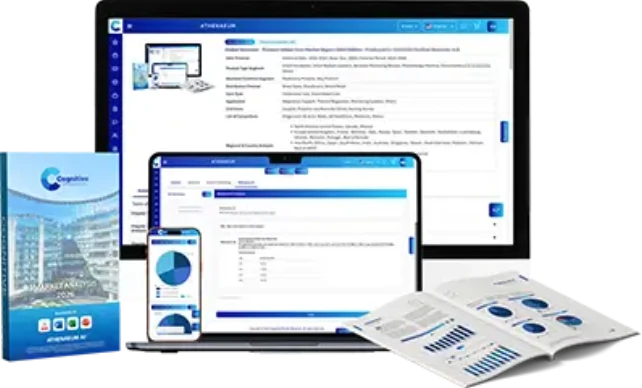
Choose from our ready-to-access 8th Edition report or commission a fully customized dataset tailored to your exact strategic questions. Cross-splits, custom geographies, proprietary segmentation — we build the intelligence asset your board actually needs.
What's Included
Ready syndicate report (250+ pages)
Custom data scope & segmentation
Excel quantitative models
Board-ready PPT with key findings
Secure cloud portal access
Service 03
Strategic Consultation
With SurveyWith Report
Every survey and every report comes with dedicated analyst consultation. Our senior research team walks your leadership through findings, answers strategic questions in real-time, and helps translate data into your next board presentation or investment thesis.
Tell us the specific segments, regions, or companies you need — and we will tailor the deliverable to your requirements.
Why Trust Us
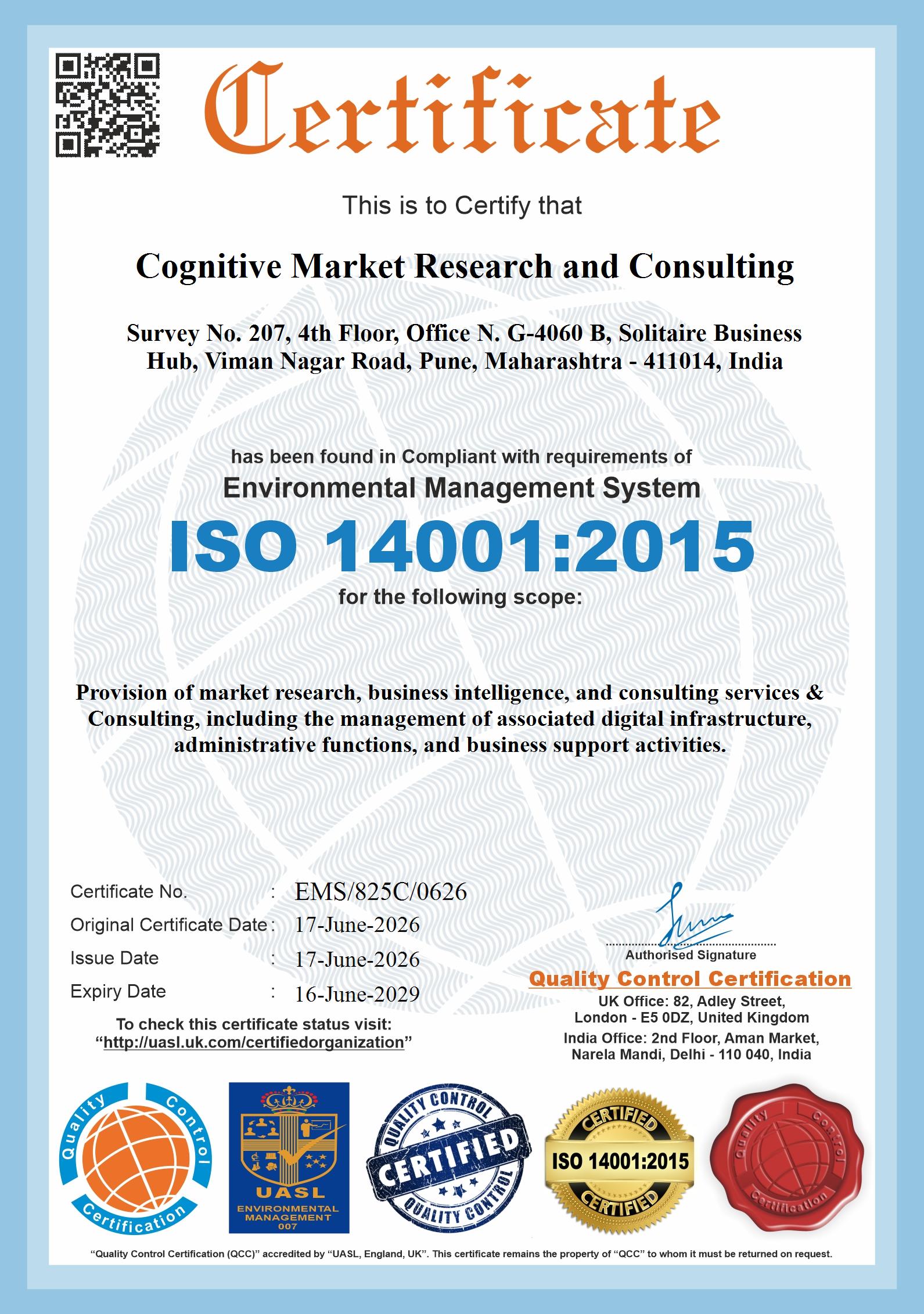
What these certifications mean to usA market figure is only as reliable as the system that produced it. That is why our accreditations cover the whole chain, not just the research step. ESOMAR and MRSI membership binds us to the professional codes that govern how respondents are recruited and how findings may be represented. ISO 20252 governs the research process itself; ISO 9001 and our quality control certification govern how consistently we repeat it. ISO 27001 and ISO 27701, alongside our GDPR, CCPA and DPDP compliance, govern what happens to your brief and your data once it reaches us; because a confidential scope is often more sensitive than the deliverable. ISO 14001, our D-U-N-S registration, Chamber of Commerce membership and DMCA protection speak to how the company itself is run and how its work is safeguarded.Our Clutch and Trustpilot profiles are deliberately listed next to them. They are the only signals on this page we do not issue ourselves, and they are the ones we would check first if we were you.
CMR has worked professionally at all times, enabling clear presentation of the results to identify key trends and areas for growth and improvement of the I…